Picture this: The year 2050. Air pollution has become so unpredictable that atmospheric quality can shift dramatically from block to block, hour to hour. The government, in its infinite wisdom, decides that every commercial space must now have “Atmospheric Consent Portals” installed at their entrances. Before you can enter any shop, restaurant, or office, you must stand before a sleek terminal and formally declare whether you “consent” to breathing that particular establishment’s air quality. Of course the state doesn’t run these portals itself. Instead, the entire operation is running from 8-10 private companies who know control every breath you take in public. These “Air Consent Management” corporations track where you go, what you breathe, how long you stay, and whether you accepted or rejected each location’s atmospheric terms. Meanwhile, a new enforcement algorithm called “AirWatch Compliance Mode” monitors businesses, penalizing those whose consent portals aren’t operating perfectly. The small bookshop owner who can’t afford a €50.000 high-tech portal system? His customers now queue outside, frustrated by consent fatigue, while his foot traffic plummets. But the real genius? Even when people click “reject” at these portal, their location and rejection are still logged, creating the most comprehensive surveillance network the world has ever seen – all in the name of protecting public health.
Today, let’s talk about Cookie Consent Banners. Most people assume this is a GDPR issue (Regulation EU 2016/679), but it’s actually rooted in the ePrivacy Directive (Directive 2002/58/EC). However, since GDPR’s National Data Protection Authorities wielded the real enforcement powers and penalties, they were sufficient to terrorize businesses, professionals, and website owners into compliance. The main objective of the ePrivacy Directive is to safeguard the privacy of individuals when using electronic communications services, impacting websites, emails, and instant messaging platforms accordingly. It addresses the collection, storage, and access to information stored on users’ devices, including cookies.
| Country | Implementation |
|---|---|
| Austria | Article 96(3) – Federal Act Enacting the Telecommunications Act 2003. |
| Belgium | Article 129 – Law of 13 June 2005 on Electronic Communications. |
| Croatia | Article 100(4) – Electronic Communications Act 2008. |
| Cyprus | Section 99(5) – Electronic Communications and Postal Services Regulations Act 2004. |
| Denmark | Articles 3 and 4 – Executive Order No. 1148 of 9 December 2011 on Information and Cookie Consent Required in Case of Storing or Accessing Information in End-User Terminal Equipment. |
| Finland | Section 205 – Information Society Code. |
| France | Article 82 – Act No. 78-17 of 6 January 1978 on Data Processing, Data Files and Individual Liberties. |
| Germany | The Federal Act on the Regulation of Data Protection and Privacy in Telecommunications and Telemedia of 23 June 2021. |
| Greece | Article 4(5) – Law 3471/2006 on the Protection of Personal Data and Privacy in the Electronic Telecommunications Sector and Amendment of Law 2472/1997. |
| Hungary | Article 155(4) – Act C of 2003 on Electronic Communications. |
| Ireland | Article 5(3), (4), and (5) of the S.I. No. 336/2011 – European Communities (Electronic Communications Networks and Services) (Privacy and Electronic Communications) Regulations 2011. |
| Italy | Article 122 – Personal Data Protection Code, Legislative Decree No. 196/2003. |
| Latvia | Section 7(1) – Law on Information Society Services 2004. |
| Lithuania | Article 61(4) – Law on Electronic Communications 2004. |
| Luxembourg | Article 4 – Act of 30 May 2005 Laying Down Specific Provisions for the Protection of Persons with regard to the Processing of Personal Data in the Electronic Communications Sector and amending Articles 88-2 and 88-4 of the Code of Criminal Procedure. |
| Malta | Article 5 – Processing of Personal Data (Electronic Communications Sector) Regulations of 2003. |
| Netherlands | Article 11.7a – Telecommunications Act 1998. |
| Poland | Article 173 – Telecommunications Act of 16 July 2004. |
| Portugal | Article 5(1) and (2) – Law No. 46/2012 of 29 August 2012. |
| Romania | Article 4(5) – Law No. 506/2004 on the Processing of Personal Data and the Protection of Privacy in the Electronic Communications Sector. |
| Slovakia | Section 55(5) of Act No. 351/2011 – Coll. on Electronic Communications. |
| Slovenia | Article 157 – Electronic Communications Act. |
| Spain | Article 22(2) – Law No. 34/2002, of 11 July 2002, on Information Society Services and Electronic Commerce. |
| Sweden | Section 18 of Chapter 6 – Electronic Communications Act. |
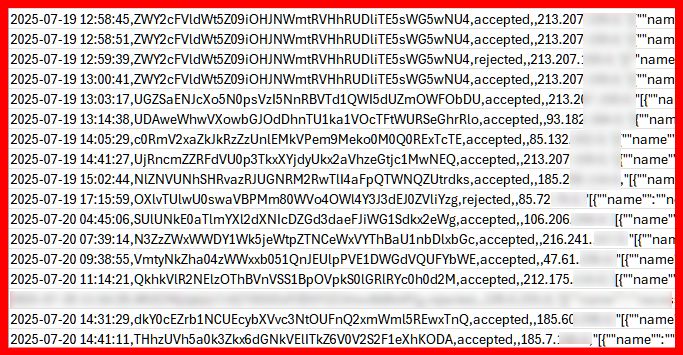
A few days ago, I decided to upgrade the Cookie Consent Module on my website. Not because I feared the state, mind you, but because I feared Google’s new “Consent Mode” engine and the possibility that it might become effective at “punishing” “bad websites” in search rankings. What I discovered was fascinating: 8-10 companies (CMPs – Consent Management Platforms) have now cornered the market, providing ready-made implementations that have captured the overwhelming majority of websites as clients. So every time someone clicks Accept/Reject, a new cookie gets installed, their IP address gets logged (along with other unique identifiers), and this data most likely gets forwarded to one of these 8-10 companies. Sure, some websites might use custom-made solutions that store data locally, but this isn’t practical or cost-effective. Why? Because you’d need to either manually maintain an ever-changing list of cookies your website uses, or develop your own automated scanner to detect them – both expensive propositions when you can simply outsource everything to a third-party CMP. The result is predictable: more and more websites are choosing the third-party route, effectively handing over their users’ consent data to this small cartel of consent gatekeepers.
8-10 companies have now cornered the market, providing ready-made implementations that have captured the overwhelming majority of websites as clients.
But here’s where it gets truly perverse: academic studies analyzing over 254.000 websites across 31 European countries found that 85% of consent interfaces fail to meet basic GDPR requirements. The noyb privacy advocacy organization filed 422 formal complaints against 82% of major websites, identifying over 1000 individual violations including missing reject options, pre-selected tracking boxes, and manipulative visual design. Yet this systematic non-compliance isn’t accidental – it’s profitable. Market concentration exacerbates the problem, with three organizations controlling 37% of the European CMP market. When your revenue model depends on maximizing data collection permissions rather than protecting privacy, compliance becomes optional. French regulators had to impose €150 million in fines on Google and €60 million on Facebook specifically for making cookie rejection more difficult than acceptance, but the fines are just cost of doing business when the surveillance profits are so enormous.
Academic studies analyzing over 254.000 websites across 31 European countries found that 85% of consent interfaces fail to meet basic GDPR requirements.
The technical reality is even more damning. Websites with CMP systems send 6,9 times more tracking cookies than those with basic implementations, proving that professional consent management correlates with increased surveillance, not privacy protection. The IAB Transparency and Consent Framework – used by most major CMPs – contains critical signal encoding bugs where user preferences aren’t properly communicated across the advertising supply chain, meaning tracking continues regardless of user choices. Third-party tracking persists through sophisticated bypass techniques: DNS redirection makes third-party cookies appear as first-party, server-side proxying hides tracking relationships, and browser fingerprinting operates completely outside the cookie consent framework. Meanwhile, users develop “click-away routines” to minimize cognitive effort, becoming more habituated to automatic tracking acceptance rather than more privacy-conscious. We’ve created the perfect storm: consent fatigue weaponized to reduce user resistance, while consent theater provides legal cover for expanded surveillance.
Websites with CMP systems send 6,9 times more tracking cookies than those with basic implementations, proving that professional consent management correlates with increased surveillance.
I don’t actually blame Google for this mess. The company was essentially forced to build Consent Mode v2 as an “enforcement algorithm” by the EU’s Digital Markets Act and related regulatory requirements. Google’s services like Analytics, Tag Manager, and Looker Studio would become illegal in the European Economic Area if the company couldn’t demonstrate 100% certainty that third-party data processing has genuine user consent. Building a surveillance-enforcement engine was simply the most expedient solution to maintain market relevance under Brussels’ regulatory framework. The alternative would have been withdrawing these services entirely from European markets, which was never realistically and/or social fair going to happen. So, Google did what any rational corporation would do: it created a technical compliance mechanism that shifts legal liability to website operators while preserving its own data collection capabilities.
This regulatory complexity highlights a deeper problem with EU digital policy. While privacy advocates celebrate GDPR and the Digital Markets Act as victories against Big Tech, the practical result has been the creation of byzantine compliance requirements that favor large corporations over small businesses. A small restaurant owner, local hotel, or independent hairdresser now faces the same consent management obligations as multinational corporations, but lacks the resources to navigate this complexity effectively. They’re forced to rely on third-party consent platforms controlled by the very surveillance economy they’re supposedly being protected from. Meanwhile, these same small businesses lose access to affordable digital marketing tools, keyword bidding systems, and competitor analytics that could level the playing field. The irony is palpable: in our zeal to protect European citizens from surveillance capitalism, we may have made it more economically advantageous to operate as a freelancer in Vietnam or Turkey than in the supposedly advanced European Union.
In our rush to regulate Big Tech through procedural complexity, we may have inadvertently strengthened the very surveillance apparatus we sought to constrain.
So what have we actually accomplished? We’ve created a comprehensive new registry of internet behavior maintained by private corporations – which, ironically, may be preferable to government control – that documents every website we visit regardless of whether we clicked “accept” or “reject” on those consent banners. Instead of addressing the root cause by reforming our educational systems to include digital literacy alongside traditional literacy, we chose to feed the surveillance leviathan with yet another layer of complexity. Google Consent Mode has emerged as the first enforcement mechanism in this new paradigm, functioning as a compliance officer that ensures websites participate in the data collection ecosystem or face exclusion from essential digital services. The profound irony is that the technical solution – monitoring and controlling cookies before they load – has been trivially simple since the 1990s. We possessed the tools to implement genuine privacy protection decades ago, but instead we constructed an elaborate theater of consent that legitimizes surveillance while creating the illusion of user control. In our rush to regulate Big Tech through procedural complexity, we may have inadvertently strengthened the very surveillance apparatus we sought to constrain.
References
- Kim, W. & White, L. (2022, February 11). Belgian DPA fines IAB Europe over its consent framework’s GDPR violations. Norton Rose Fulbright Data Protection Report. Retrieved from https://www.dataprotectionreport.com/2022/02/belgian-dpa-fines-iab-europe-over-its-consent-frameworks-gdpr-violations/
- Clifton, B. (2022, March 14). Consent Mode – Why you should not use it. Brian Clifton Blog. Retrieved from https://brianclifton.com/blog/2022/03/14/google-consent-mode-breaks-privacy-laws/